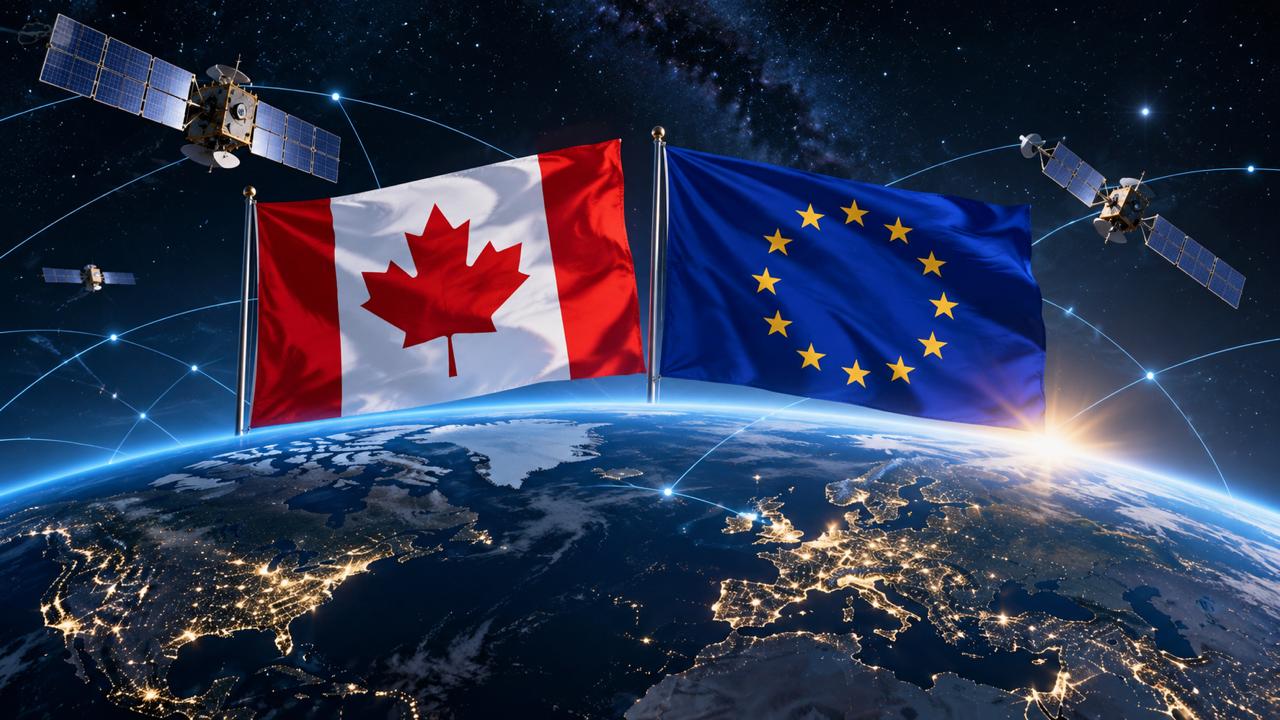
Canada and EU to Negotiate Galileo Access, Explore IRIS2 Cooperation
Canada and the European Union agreed to open negotiations on Canadian access to Galileo, the EU's satellite navigation system, according to a joint statement from their summit in Montreal on Friday. The two sides will also begin exploratory talks on cooperating on IRIS2, the bloc's planned secure-communications constellation. The agreement positions Canada closer to European space infrastructure at a time of shifting transatlantic ties. The move reflects a broader realignment as allied nations
OST Staff · October 30, 2026
Canada and the European Union agreed to open negotiations on Canadian access to Galileo, the EU's satellite navigation system, according to a joint statement from their summit in Montreal on Friday. The two sides will also begin exploratory talks on cooperating on IRIS2, the bloc's planned secure-communications constellation.
The agreement positions Canada closer to European space infrastructure at a time of shifting transatlantic ties. The move reflects a broader realignment as allied nations seek sovereign and shared access to navigation and secure communications.
The joint statement committed the two sides to opening negotiations on Canadian access to Galileo. Separately, they agreed to begin exploratory talks on cooperation around IRIS2, the EU's planned secure-communications constellation. Both commitments were announced through the joint statement issued at the Canada-EU summit.
Officials present at the Montreal summit included Melanie Joly, Andrius Kubilius, Ursula von der Leyen, Antonio Costa and Mark Carney.
The agreements signal deeper Canada-EU space cooperation, reflecting efforts by allied nations to secure both sovereign and shared access to navigation and secure-communications systems.
The next steps are the negotiations on Canadian access to Galileo and the exploratory talks on IRIS2 cooperation, both opened under Friday's joint statement.