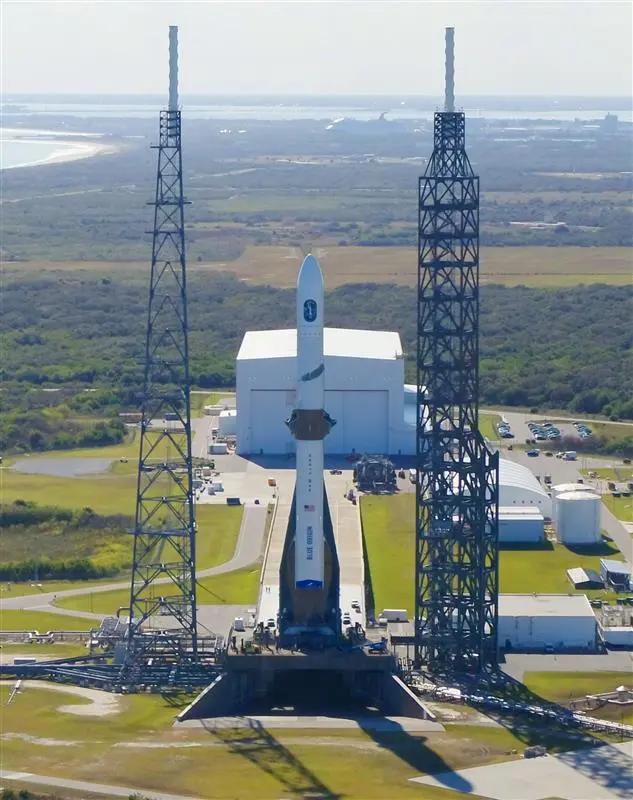
Blue Origin Pushes Next New Glenn Launch to January 2027 After Pad Explosion
Blue Origin has moved the next flight of its New Glenn rocket to January 2027, slipping its return to flight into the new year after a test explosion damaged its Florida launchpad. The company had been working toward a launch before the end of 2026, making the change a shift of weeks or a few months. The cause is physical rather than procedural. A major explosion during testing in May 2026 caused extensive damage to Blue Origin's Florida launchpad, and the revised schedule follows from that dam
OST Staff · November 5, 2026
Blue Origin has moved the next flight of its New Glenn rocket to January 2027, slipping its return to flight into the new year after a test explosion damaged its Florida launchpad. The company had been working toward a launch before the end of 2026, making the change a shift of weeks or a few months.
The cause is physical rather than procedural. A major explosion during testing in May 2026 caused extensive damage to Blue Origin's Florida launchpad, and the revised schedule follows from that damage. The delayed mission was meant to carry Amazon internet satellites, though the reporting does not specify how many were on the manifest.
Chief executive Dave Limp framed the move in measured terms. "This small adjustment doesn't diminish what we've accomplished or the importance of the work still ahead," he said. He added that "Returning New Glenn to flight remains our top priority," and closed with the line "It's worth it." The statements as reported give no specific launch date, no repair milestone and no payload count, and do not say whether the January target has margin built in.
New Glenn stands 98 metres tall, or 322 feet, and had launched three times since its 2025 debut. The reporting does not establish how many earlier postponements the program has had, so no number is placed on them. What the record supports is that one target, the end of 2026, gave way to another, January 2027, with the May 2026 explosion behind the change.
Reports describe the pad damage as extensive but do not publish a dollar estimate or itemize which pad systems failed. A pad failure differs from a flight failure because it affects the infrastructure every future vehicle depends on, including propellant handling, structural supports, flame management and ground controls. Blue Origin can build more rockets in parallel while the pad is down, but cannot launch any of them until the pad passes requalification.
Several details stay unconfirmed in the cited coverage. The exact January launch date, launch time, number of Amazon satellites aboard, whether the January target will be met, the count of earlier postponements, and the cost of the pad damage are all not specified. The reporting also does not say how Amazon is responding, describing no contract penalties, alternative launch bookings or revised deployment schedules.
By Limp's framing, the delay is a deliberate trade, accepting a later date in exchange for a return to flight the company treats as its top priority. The "top priority" language is a resourcing claim, implying engineering time, capital and management attention flow to the return-to-flight effort. For Blue Origin, the Amazon payload is a test of commercial credibility, showing a rocket can serve routine constellation demand.
The key milestones to watch run from pad repair through requalification to a firm launch date. Anyone who sees a precise January date circulating online should treat it as unverified until Blue Origin or Amazon publishes one.