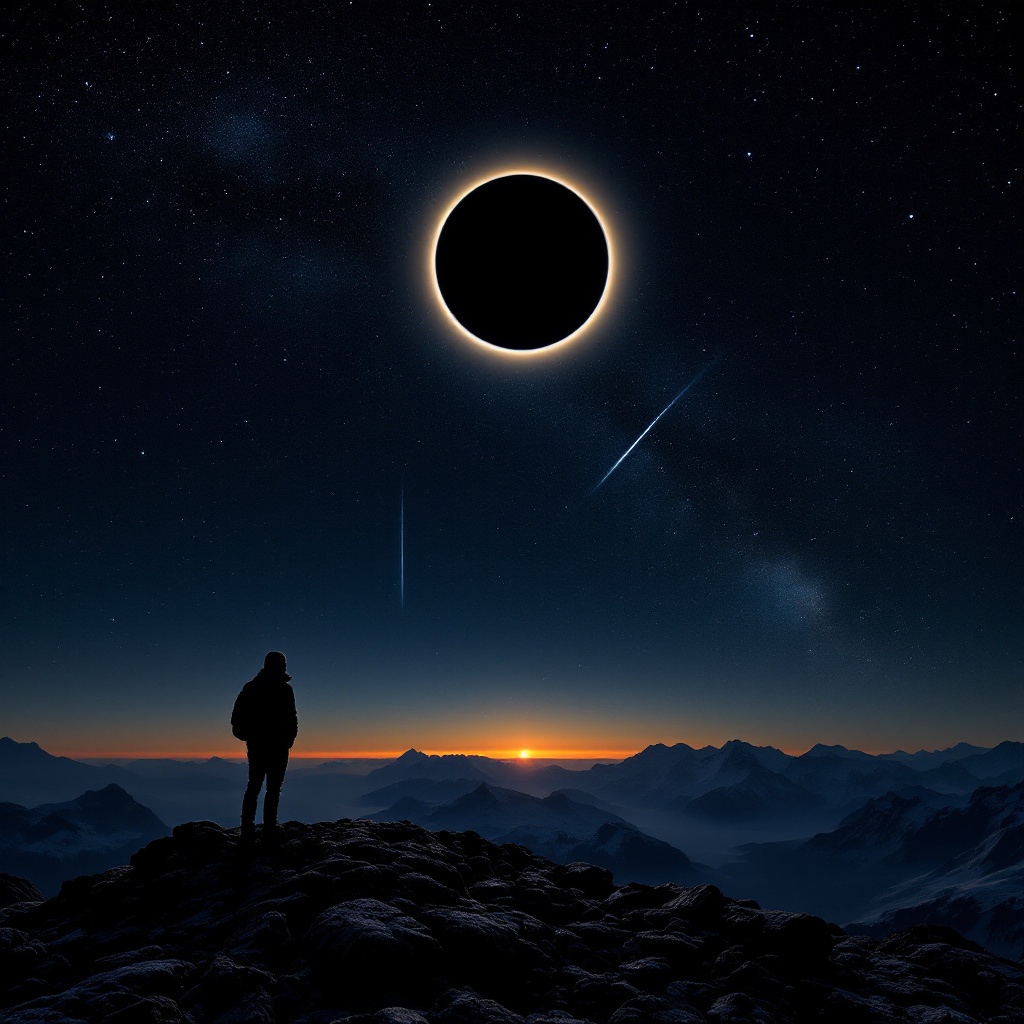
Four Sky Events Converge on August 12 in Rare Skywatching Window
Skywatchers across North America and Europe face an exceptional 24 hours on Wednesday, August 12, when a daytime solar eclipse, the peak of the Perseid meteor shower, a brilliant Venus and glowing views of the Milky Way arrive within a single calendar day. The concentration of celestial events on one date is unusual enough to rank among the standout observing opportunities of the year. The day opens with the moon partially covering the sun over Alaska, eastern Canada and parts of the northeaste
OST Staff · August 1, 2026
Skywatchers across North America and Europe face an exceptional 24 hours on Wednesday, August 12, when a daytime solar eclipse, the peak of the Perseid meteor shower, a brilliant Venus and glowing views of the Milky Way arrive within a single calendar day. The concentration of celestial events on one date is unusual enough to rank among the standout observing opportunities of the year.
The day opens with the moon partially covering the sun over Alaska, eastern Canada and parts of the northeastern United States. A total solar eclipse will track along a narrow path across eastern Greenland, western Iceland and northern Spain, drawing eclipse chasers to those regions. Roughly 779 million people across North America, Europe and North Africa will see at least a 10 percent partial eclipse, according to Time and Date.
Northern Canada gets North America's deepest partial eclipse, with parts of Nunavut in the Canadian Arctic seeing up to 93 percent of the sun covered. Eastern cities including Toronto, Ottawa and Quebec will see between 8 and 24 percent coverage. In the United States, the best views come from Alaska and the Northeast, with Fairbanks seeing 37 percent and Boston 16 percent. In Europe, London will see a 91 percent eclipse and Paris 92 percent. Observers everywhere must use ISO 12312-2 certified solar eclipse glasses throughout the partial phase, and fit binoculars, telescopes and cameras with solar filters before pointing them at the sun.
After sunset, Venus becomes easy to spot as it reaches dichotomy, the point at which the planet appears half illuminated. Through a small telescope or large stargazing binoculars, Venus should resemble a tiny half-moon as it moves closer to Earth. Once darkness falls, the annual Perseid meteor shower peaks during the overnight hours of August 12 to 13. This year's display benefits from a new moon, meaning no moonlight to wash out faint meteors. Observers under truly dark skies could see between 50 and 75 meteors per hour, while suburban locations should still enjoy frequent shooting stars, according to The Planetary Society.
The best viewing runs from midnight to 2 a.m. local time, when the sky is darkest and the constellation Perseus is highest. As a final bonus, those under dark, rural skies will see the Milky Way arch overhead, offering one of the finest views of the galaxy all year.
The combination of a daytime solar eclipse, a moon-free Perseid peak, a dazzling Venus and clear Milky Way views makes August 12 a strong opportunity for anyone interested in the night sky. If skies are clear, it could be the single greatest day and night for skywatching in years.
Observers should watch weather and sky conditions in their location, secure certified solar eclipse glasses and solar filters ahead of time, and plan viewing between midnight and 2 a.m. for the Perseid peak.