Astrolight Links Orbiting Laser Terminal to Greek Ground Station in First End-to-End Demonstration
Astrolight has established its first end-to-end optical communication links from space to ground, connecting its ATLAS-1 laser communication terminal in orbit with its OGS-2.5 optical ground station in Greece. The company announced the demonstration on October 8, reporting that the link progressed from first light to routine operations at 1 Gbps within a week. Astrolight developed the terminal in cooperation with the European Space Agency and worked with the Department of Aerospace of the Unive
OST Staff · October 11, 2026
Astrolight has established its first end-to-end optical communication links from space to ground, connecting its ATLAS-1 laser communication terminal in orbit with its OGS-2.5 optical ground station in Greece. The company announced the demonstration on October 8, reporting that the link progressed from first light to routine operations at 1 Gbps within a week.
Astrolight developed the terminal in cooperation with the European Space Agency and worked with the Department of Aerospace of the University of Athens and the Department of Physics of the Aristotle University of Thessaloniki on the project. The demonstration is part of the company's effort to bring laser communications further into the satellite mainstream.
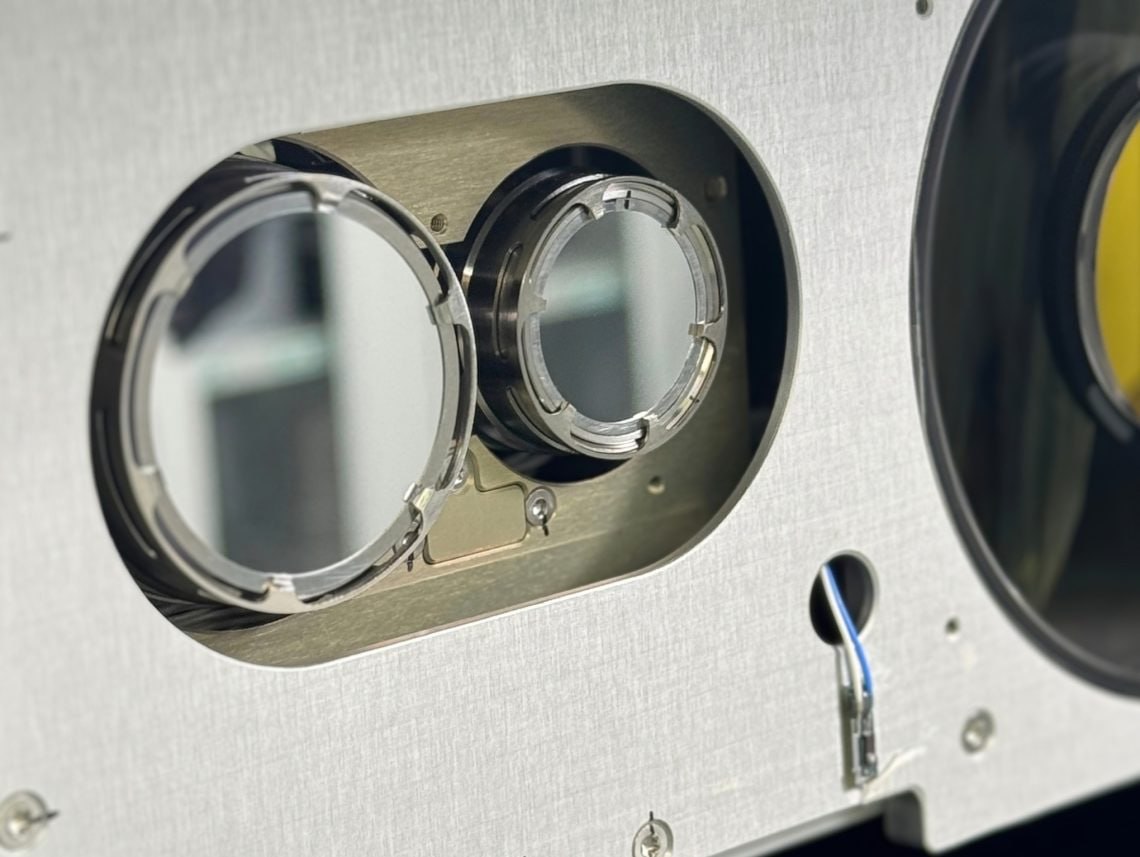
In the demonstration, Astrolight's ATLAS-1 terminal, carried aboard the ERMIS-3 nanosatellite, connected with the HolOGS-1 optical ground station in Holomondas, Greece. Astrolight upgraded that ground station to its OGS-2.5 model for the PeakSat mission. The company's team in Lithuania operated both systems remotely.
Astrolight reports that ATLAS-1 is currently transmitting data at 1 Gbps, while link budget margins indicate the system could support rates of up to 10 Gbps. Both ATLAS-1 and OGS-2.5 achieved first light during the satellite's first active pass over the ground station. By the third pass, the systems operated autonomously on a pre-scheduled basis at both ends of the link.
"The next step for laser communications is making them routine for satellite operators, with high-capacity links that can be deployed and operated remotely with minimal operational oversight," said Dalius Petrulionis, CTO and co-founder of Astrolight. "Proving that our space and ground systems have this capability brings us closer to making optical connectivity practical for commercial missions at scale."
The company frames the demonstration as a step toward making optical connectivity practical for commercial missions at scale, with high-capacity links that can be deployed and operated remotely with minimal operational oversight.
Astrolight has not named further milestones for the program beyond its stated goal of making laser communications routine for satellite operators.