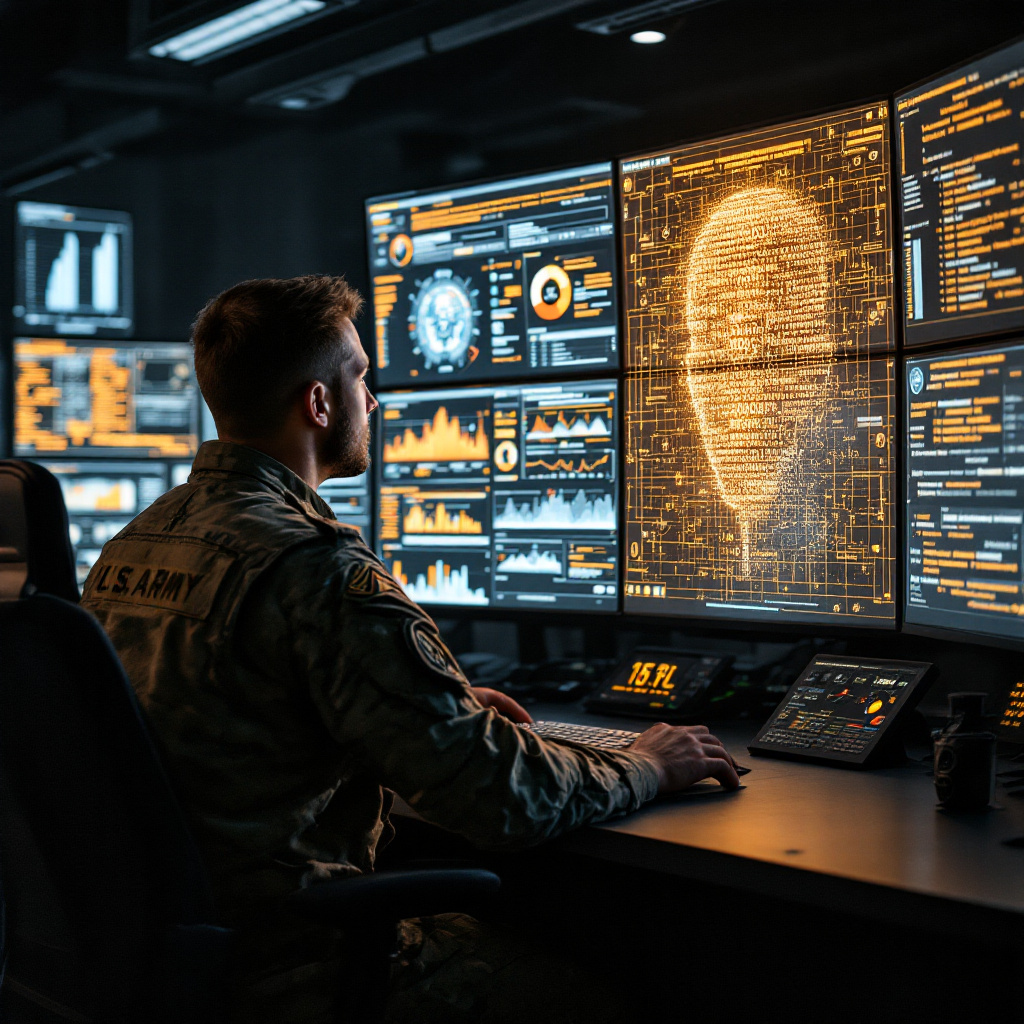
Army Trains AI Agents to Fill Cyber Work Roles Alongside Soldiers
The U.S. Army is training artificial intelligence agents to perform defined cyber work roles alongside human personnel, a shift that moves AI from analytical tool to active participant in cyber operations workflows. The effort runs through Task Force Lexington, which houses all of Army Cyber Command's AI initiatives, and includes a dedicated AI red team. The program marks a departure from treating AI primarily as an aid for analysis. Instead, the Army is placing AI agents into structured operat
OST Staff · August 21, 2026
The U.S. Army is training artificial intelligence agents to perform defined cyber work roles alongside human personnel, a shift that moves AI from analytical tool to active participant in cyber operations workflows. The effort runs through Task Force Lexington, which houses all of Army Cyber Command's AI initiatives, and includes a dedicated AI red team.
The program marks a departure from treating AI primarily as an aid for analysis. Instead, the Army is placing AI agents into structured operational roles that mirror the functions performed by soldiers, integrating them directly into how cyber work is carried out.
Task Force Lexington consolidates the AI work being done under Army Cyber Command. Within that structure, AI agents are being trained to take on cyber work roles side by side with their human counterparts. Among the specific components of the initiative is an AI red team, which uses AI to simulate adversary behavior in cyber operations. The coverage detailing the effort was published on August 20, 2026. No specific timeline or figures on the scale of the program were available.
The presence of an AI red team means the Army is applying artificial intelligence to test and harden its own networks by imitating how an attacker would operate. That role sits at the center of how the military evaluates its cyber posture, and it places AI in a position that touches both offensive simulation and defensive readiness.
The initiative represents what amounts to an escalation beyond using AI as an analytical assistant. By training agents in defined work roles, the Army is automating parts of cyber operations workflows rather than simply speeding up human analysis. The AI red team component in particular signals that AI is being used to stand in for adversary activity during the process of stress-testing military systems.
The AI red team is the element worth following. If it performs as intended, the Army would gain the ability to stress-test its cyber defenses at machine speed, altering the economics of maintaining cyber readiness. No further milestones or decisions were named in the source material.