Space Weapons Admission Fuels Opposition to New Haleakalā Telescopes
Air Force Secretary Troy Meink's confirmation that the United States has deployed weapons in orbit has intensified concerns on Maui over the Air Force's plan to build up to seven additional telescopes atop Haleakalā, a summit many Native Hawaiians consider sacred. Opponents say the disclosure clarifies the purpose of the ground sensors the service wants to add. Speaking Sept. 14 at the Air and Space Forces Association's Air, Space and Cyber Conference in Maryland, Meink said the United States h
OST Staff · October 12, 2026
Air Force Secretary Troy Meink's confirmation that the United States has deployed weapons in orbit has intensified concerns on Maui over the Air Force's plan to build up to seven additional telescopes atop Haleakalā, a summit many Native Hawaiians consider sacred. Opponents say the disclosure clarifies the purpose of the ground sensors the service wants to add.
Speaking Sept. 14 at the Air and Space Forces Association's Air, Space and Cyber Conference in Maryland, Meink said the United States has "on-orbit space control weapons capable of defending the Joint Force against hostile adversary action." The Associated Press reported it as the first time the United States has confirmed deploying weapons in space. Meink gave no details on the type of weapons, when they were launched, or how many are in orbit.
Meink said the threat is changing faster than he expected when he took the job 18 months ago. "Today, we face a mix of rapidly changing technologies, adversaries moving aggressively to employ them, and a budget process for a different pace of warfare," he said. Before becoming secretary, Meink was principal deputy director of the National Reconnaissance Office and earlier ran satellite acquisition programs there and in the Air Force.
Protect Haleakalā ʻOhana, a community collective that opposes the telescopes, called the plan "a military expansion into more sacred space, not a scientific addition to it." The group said the Air Force is "deploying find, fix, track and target sensors, not just astronomy telescopes," and that Meink's announcement "makes plain what the chain is for." Kingi Gilbert of the group agreed the proposed instruments are tracking tools, not weapons. "We are not claiming a telescope is a munition. It isn't," he wrote, but he said Air Force documents describe one planned instrument as providing "timely and accurate tracking data on adversary threat satellites."
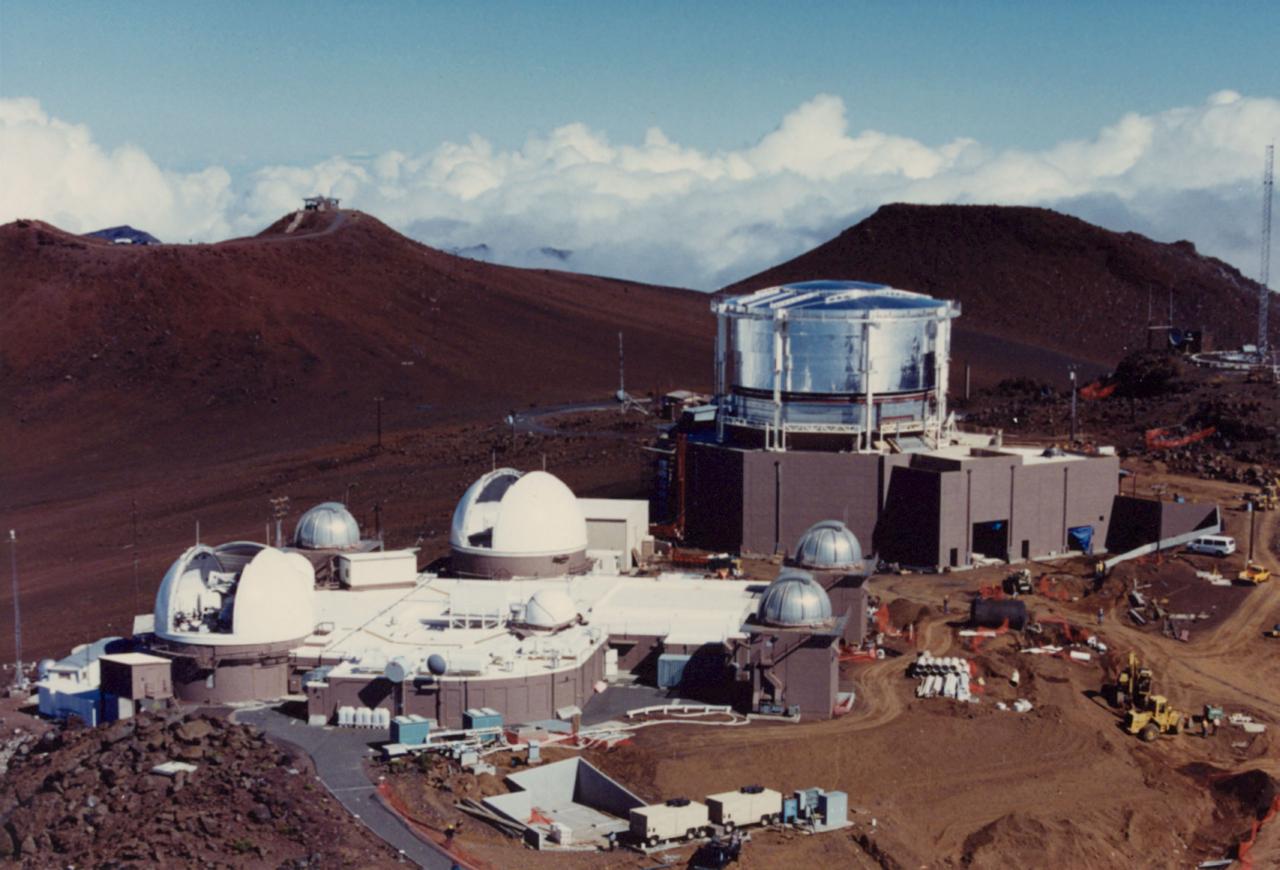
Asked whether the AMOS STAR mission includes any tracking, targeting or data-sharing role connected to the weapons Meink described, an Air Force spokesperson said the mission is "focused on Space Domain Awareness, utilizing its dual facilities to conduct satellite detection, identification, imaging, and orbital tracking." The spokesperson called its role "centered on scientific research and development, observational surveillance, and data modeling." Neither answer stated whether data from the telescopes would feed a weapon system or targeting chain. AMOS STAR is short for the Air Force Maui Optical and Supercomputing Site Small Telescope Advanced Research facility.
Spokesperson Hina Kneubuhl said the group opposes adding military equipment regardless of whether a link to weapons targeting exists. More sensors could make Haleakalā a bigger target, she said, and fighting in orbit could create debris threatening satellites that provide services such as GPS. She called Meink's remarks "an open admission of what we've been researching for months."
Haleakalā has hosted defense and research facilities since the 1950s. Six academic and four space surveillance telescopes sit on 18 acres at the summit. AMOS STAR would add up to seven more at an estimated cost of $5.9 million, with construction expected to start around 2026-2027 and last about two years. Maui County Mayor Richard Bissen and all nine County Council members formally opposed the project in 2024.
The project also proceeds as the Air Force continues cleanup of a 700-gallon fuel spill at the summit from January 2023. Space Force officials said in 2025 the full cleanup could take as long as 2032.