AFRL to Fund $30M Cislunar Prime Challenge With Awards Starting Next Spring
The Air Force Research Laboratory plans to launch a new technology challenge next month aimed at accelerating systems that can operate beyond geosynchronous orbit. The effort, known as Cislunar Prime, will put $30 million toward commercial capabilities that could move the Space Force onto a faster path toward cislunar operations. SpaceWERX is leading the program, soliciting commercial capabilities in three focus areas: space domain awareness, cislunar communications, and positioning, navigation
OST Staff · October 29, 2026
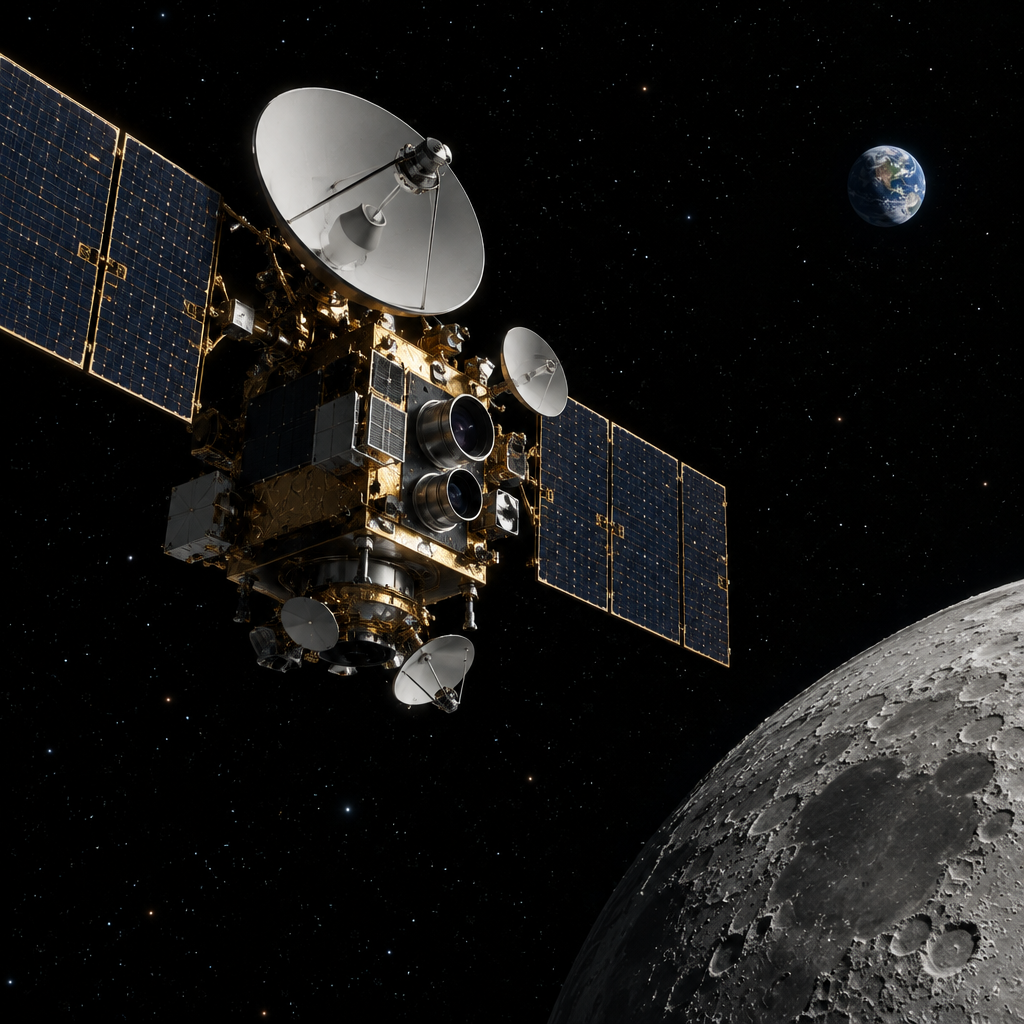
The Air Force Research Laboratory plans to launch a new technology challenge next month aimed at accelerating systems that can operate beyond geosynchronous orbit. The effort, known as Cislunar Prime, will put $30 million toward commercial capabilities that could move the Space Force onto a faster path toward cislunar operations.
SpaceWERX is leading the program, soliciting commercial capabilities in three focus areas: space domain awareness, cislunar communications, and positioning, navigation, and timing. The Space Force defines cislunar as the region past GEO extending to the moon and beyond, spanning hundreds of thousands of kilometers and 1,728 times the volume of space contained within GEO. Those conditions, including distance from Earth and unstable trajectories, create challenges for satellite operations like PNT and SDA.
An AFRL spokesperson said the tentative plan is to officially announce Cislunar Prime in December, solicit proposals in January, and begin awarding contracts next spring. The $30 million will fund 15 direct-to-phase-two Small Business Innovation Research contracts worth $2 million each.
Speaking Oct. 21 at AFCEA's Space Industry Days conference, Portfolio Acquisition Executive for Advanced Programs Maj. Gen. Stephen Purdy said the Space Force needs a better understanding of how to operate in cislunar space. "Space is often described as hard and difficult and a fight that we're not seeing," he said. "But I would characterize cislunar as even harder and more difficult, and we really don't see what's going on in that arena."
The Space Force has a handful of active projects exploring cislunar operations, including AFRL's Oracle program, which plans to launch its first satellite in December as a pathfinder for efficient cislunar mobility, navigation, and space domain awareness. Over the past year, the service has signaled it plans to ramp up cislunar research and development, driven in part by China's plans to establish a presence beyond GEO and on the moon.
Purdy said the Pentagon's posture toward cislunar operations and planning has shifted significantly over the past year. He cited President Donald Trump's December 2025 executive order that emphasized the importance of cislunar operations, as well as Chairman of the Joint Chiefs of Staff Gen. Dan Caine's acknowledgement of cislunar as a "warfighting domain" during AFA's Air, Space, and Cyber Conference in September.
The service is now looking to quickly fund satellites and software that could be ready for operations as soon as 2029, Purdy said. "We're looking for existing commercial or near-commercial means, non-developmental solutions, hardware with actual relevant evidence behind it, software that doesn't need a huge amount of work … and ground systems," he said. "This isn't a four- or five-year science project. This is about getting capability out soon."
Beyond Cislunar Prime, the Space Force and its newly established Cislunar Coordination Office have two forthcoming requests for information. The first focuses on existing cislunar hardware and software that could fly in the next two to three years, and the second targets AI and autonomous processing capabilities. AFRL intends to announce Cislunar Prime in December, solicit proposals in January, and begin awards in the spring.