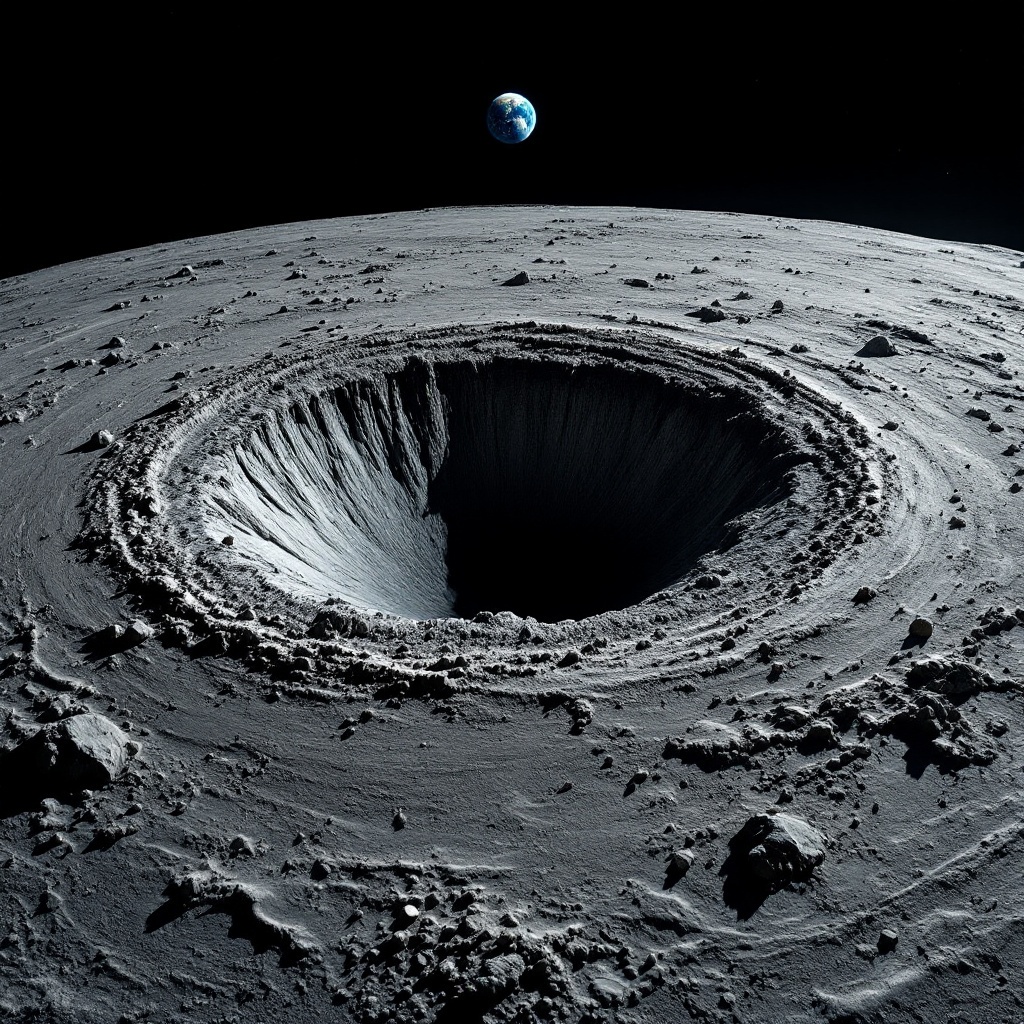
Discarded Falcon 9 Upper Stage Strikes the Moon at 5,400mph
A four-tonne piece of a spent SpaceX Falcon 9 rocket that had drifted in space since last year is believed to have crashed into the Moon on Wednesday, gouging out a new lunar crater. The unintentional collision posed no danger to Earth, and NASA and SpaceX said they are now studying how to prevent similar impacts in the future. The object, roughly the size of a school bus and the height of a five-storey building, was the second stage of the Falcon 9 that launched two commercial lunar landers, o
OST Staff · August 5, 2026
A four-tonne piece of a spent SpaceX Falcon 9 rocket that had drifted in space since last year is believed to have crashed into the Moon on Wednesday, gouging out a new lunar crater. The unintentional collision posed no danger to Earth, and NASA and SpaceX said they are now studying how to prevent similar impacts in the future.
The object, roughly the size of a school bus and the height of a five-storey building, was the second stage of the Falcon 9 that launched two commercial lunar landers, one American and one Japanese, in January 2025. Such rocket stages typically fall back into Earth's atmosphere and burn up or plunge into the ocean, but because the lunar mission required more thrust, this stage remained in space among thousands of other pieces of debris.
The stage, which had dumped its remaining fuel and could not be controlled, was found this year to be on a trajectory ending at the Moon. Julianna Scheiman, SpaceX's director of NASA science and Dragon spacecraft programmes, said the collision was the result of a mixture of solar activity and gravity forces putting the stage on a path toward the Moon.
The rocket body was due to hit the surface at about 6.35am BST, striking at 5,400mph. The impact was predicted to kick up a miles-long plume of lunar dust that, while illuminated by sunlight, would be difficult to spot from Earth with the naked eye. Professional and amateur astronomers using high-quality telescopes and cameras were unable to confirm the impact on Wednesday, possibly because the site sat close to the visible edge of the Moon. NASA said the impact was expected to create a crater about 60ft wide and 12ft deep, throwing dust and rock outward as ejecta.
NASA spokesperson Jimi Russell said the impact posed no danger to Earth and that agency scientists were planning to collect lunar data from the event and refine techniques for tracking objects in space. The agency said it would look for opportunities to image the site, with any data helping scientists better understand artificial impacts and their exploration implications. Bill Gray, the creator of a widely used astronomy software who published a report on the stage's impact in April, said the event may be of minor scientific interest, adding that it does not present any danger to anyone but highlights a certain carelessness about how leftover space hardware is disposed of.
NASA said the data collected would help scientists better understand artificial impacts and their exploration implications, and Scheiman said NASA and SpaceX were discussing ways to prevent future lunar impacts. Human-made impacts on the Moon are relatively rare. A Chinese rocket stage crashed into the Moon in March 2022, and in 2009 NASA intentionally crashed a rocket stage into the surface to study the plume of material kicked up by the impact.
US and South Korean lunar satellites will be positioned to photograph the site after impact, though it may take days to receive that information. NASA and SpaceX are continuing to discuss measures to prevent future upper stage collisions with the Moon.