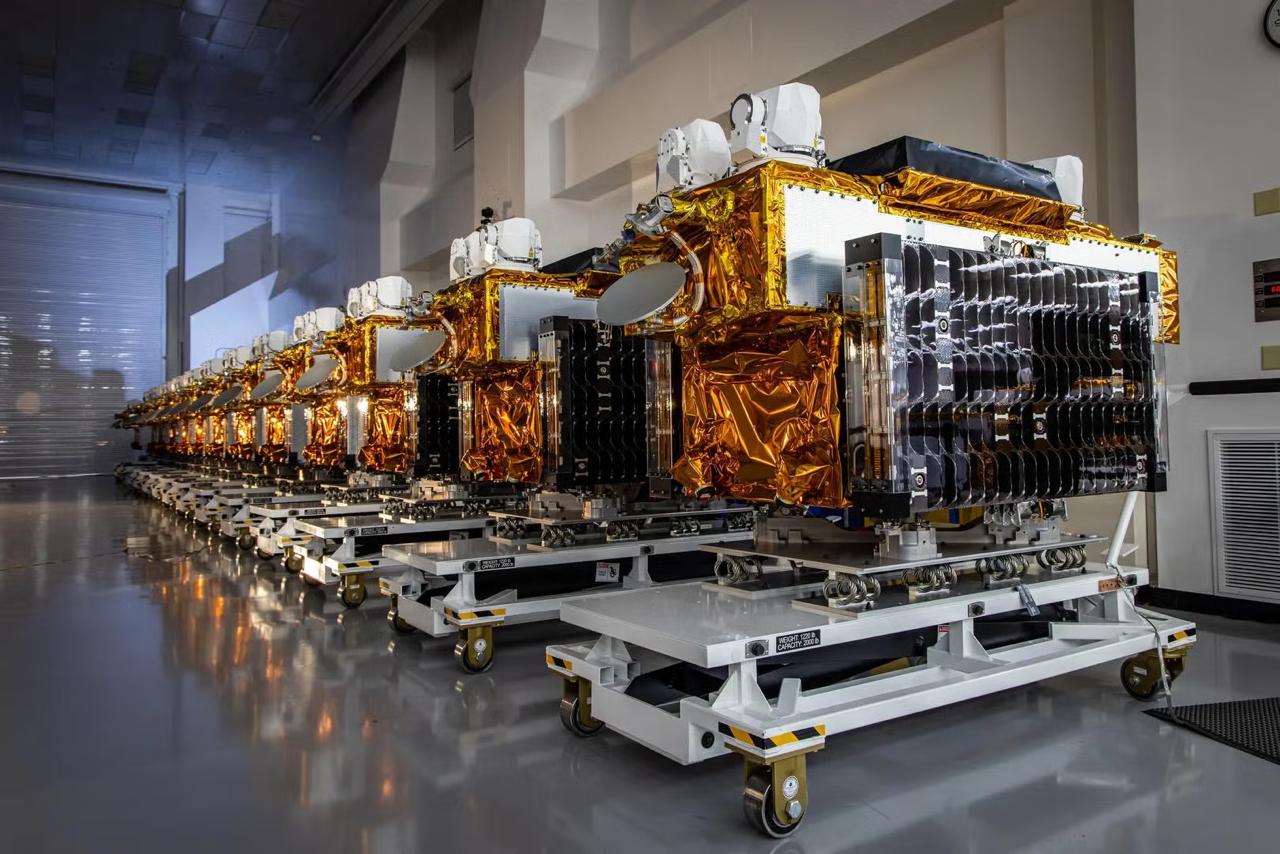
Northrop Grumman Delivers 21 Transport Layer Satellites to Vandenberg for Space Force Constellation
Northrop Grumman said on Monday it has delivered 21 satellites to Vandenberg Space Force Base, California, for Tranche 1 of the Space Development Agency's Transport Layer. The delivery moves the batch toward launch staging as the Pentagon builds out its proliferated low Earth orbit constellation for military communications. The Transport Layer is designed to include hundreds of Low-Earth Orbit satellites to speed secure military communications. Together with the Tracking Layer for missile deter
OST Staff · September 29, 2026
Northrop Grumman said on Monday it has delivered 21 satellites to Vandenberg Space Force Base, California, for Tranche 1 of the Space Development Agency's Transport Layer. The delivery moves the batch toward launch staging as the Pentagon builds out its proliferated low Earth orbit constellation for military communications.
The Transport Layer is designed to include hundreds of Low-Earth Orbit satellites to speed secure military communications. Together with the Tracking Layer for missile deterrence, it forms the two major components of SDA's future Proliferated Warfighter Space Architecture. Tranche 1 of the Transport Layer is to have 126 satellites, split evenly among three prime contractors: 42 by Northrop Grumman, 42 by York Space Systems, and 42 by Lockheed Martin.
Northrop Grumman said several dozen additional company-built satellites for the PWSA will be launched into LEO over the next six months, contributing to both the missile defense and data transport missions. The company said multiple PWSA contracts are underway, each delivering incremental improvements in mission capability, and that dozens of satellites are fully integrated with final checkouts in progress.
Keith Matthews, Northrop Grumman's Tranche 1 Transport Layer program manager, said the company is using some of its 7 million square feet of manufacturing space dedicated to space programs, equipped with advanced manufacturing systems and AI, to efficiently support the evolving production demands of its PWSA programs.
This month, SDA said it expects the second launch of Tranche 1 Transport Layer satellites in early October and that all Transport and Tracking Layer satellites for Tranche 1, the first set intended to conduct military operations, are to be in orbit within the next six to eight months. Beyond the 126 Transport Layer satellites, Tranche 1 will also include 28 Tracking Layer satellites for missile warning and tracking and four missile defense demonstration spacecraft. The Tranche 1 effort is more than a year behind the original plan, primarily due to supply chain hold-ups for the production of Optical Communication Terminals.
The delivery is a test of whether the Pentagon's bet on many small, comparatively inexpensive satellites, rather than a few exquisite ones, can field on schedule. Hitting delivery milestones is the measure of whether that model works at scale, with Northrop one of several vendors working to prove the concept. Building the satellites was always the easier part. The harder test is launching and operating hundreds of them on a wartime timeline.
Attention now turns to the second Tranche 1 Transport Layer launch expected in early October and the goal of placing all Tranche 1 Transport and Tracking Layer satellites in orbit within the next six to eight months.